
Interoperability · Lab Automation
LIS Integration with EHR and EMR: An Implementation Guide
What are the main steps in LIS–EMR integration?
Define the data exchanged and vendor responsibilities, map order and result codes, establish the connection, and test representative workflows and exceptions. Validate the interface with your lab and EMR teams before go-live. The messages and transport supported depend on the systems and scope involved.
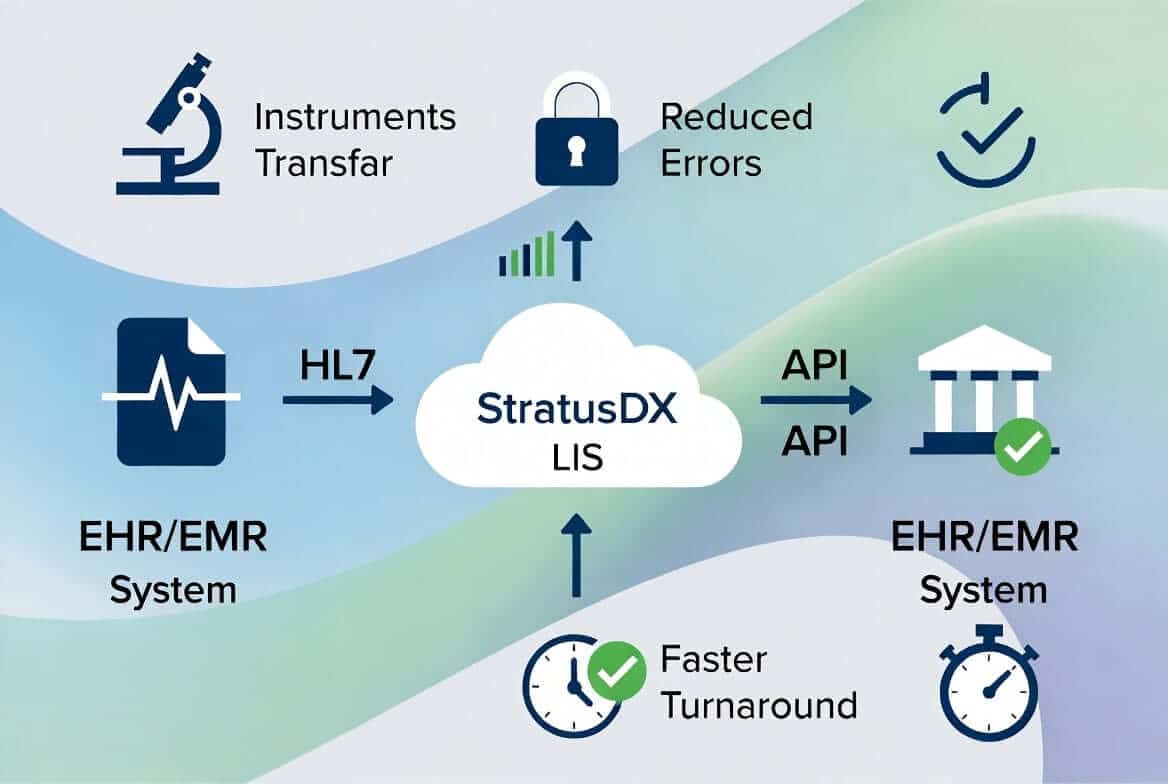
Mastering LIS Integration with EHR/EMR
In today's interconnected healthcare ecosystem, effective LIS integration with EHR/EMR has become a critical priority for laboratories and healthcare providers alike. Labs that fail to prioritize proper interoperability often face persistent inefficiencies, manual transcription errors, delayed result reporting, and frustrated clinicians who cannot access critical diagnostic information in real time.
This comprehensive guide explores exactly how to successfully implement LIS integration with EHR/EMR, providing a practical roadmap that clinical laboratories, physician office labs (POLs), and reference labs can follow to achieve reliable interoperability.
Whether you are evaluating a new LIS, upgrading legacy interfaces, or preparing for value-based care reporting requirements, understanding the nuances of system interoperability will help you avoid costly mistakes and accelerate time-to-value.
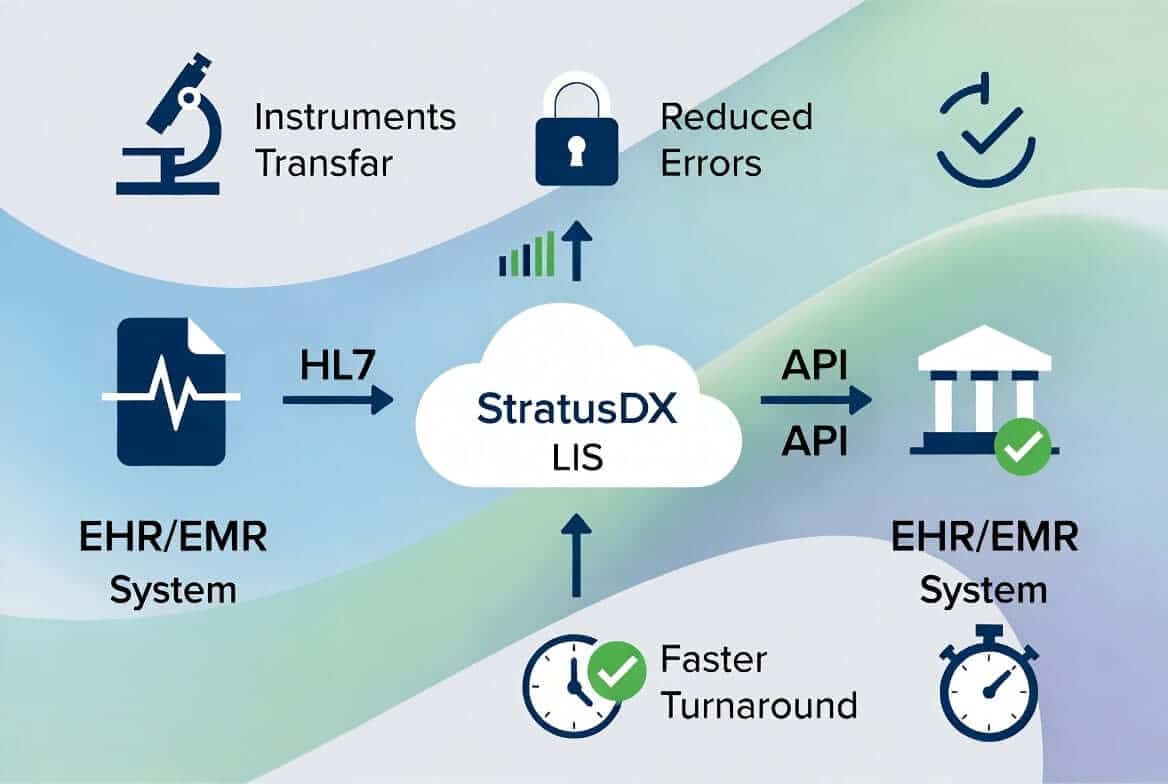
Why Prioritizing LIS-EHR/EMR Interoperability Delivers Transformative Value
The value of proper LIS integration with EHR/EMR cannot be overstated. When laboratory data flows automatically and accurately into the electronic health record, the entire care team benefits from immediate access to results, trends, and interpretive comments without leaving the patient chart.
Key improvements laboratories typically see:
- Compare a current, written quote that identifies the platform, interfaces, modules, implementation responsibilities, and any third-party charges. Do not assume another laboratory’s costs or results apply to your configuration.
- 2-6 hours faster average turnaround time for routine lab results
- Automation and integrated workflows can reduce repetitive work. Measure the effect against your laboratory’s own baseline, including manual entry, turnaround time, rework, and staff workload.
According to leading industry resources, integrated laboratory systems enable automated electronic test requests and results reporting that dramatically improve timeliness, accuracy, and availability of information for clinical decision-making. The APHL LIS Integration Guide emphasizes that interfacing should leverage centralized integration approaches and industry standards rather than one-off custom connections.
Furthermore, successful LIS integration with EHR/EMR supports critical compliance initiatives including HIPAA audit requirements, meaningful use / promoting interoperability programs, and medical necessity documentation that helps reduce claims denials.
Step-by-Step Guide to Implementing LIS Integration with EHR/EMR
Follow this structured approach used by successful laboratories across the country.
1. Conduct a Comprehensive Needs Assessment
Before any technical work begins on your LIS integration with EHR/EMR project, invest time in a thorough discovery phase. Assemble a cross-functional team including laboratory leadership, IT specialists, compliance officers, billing staff, and key referring clinicians.
Document current workflows: How are orders currently placed? Are results faxed, printed, or manually entered into the EHR/EMR? What pain points exist around critical values, add-on testing, or result corrections? Quantify test volumes by specialty and identify high-impact interfaces first (e.g., chemistry, hematology, molecular diagnostics).
Pro tip from Stratus DX implementations: Map every data element that must move between systems, including patient demographics, insurance information, test codes (ideally LOINC), specimen source, priority, and all result components with units and flags.
2. Select an Interoperable, Future-Proof LIS Platform
Choosing the right LIS is one of the most consequential decisions in any LIS integration with EHR/EMR initiative. Legacy client-server systems often require expensive, fragile middleware layers and ongoing maintenance contracts that drain resources.
Stratus DX was built from the ground up as a modern cloud-native LIS specifically to simplify LIS integration with EHR/EMR. Our platform delivers robust, standards-based connectivity without the traditional headaches of on-premise infrastructure.
Key advantages include:
- Native support for HL7 v2 messaging (ORM, ORU, ADT, DFT) with the latest implementation profiles
- Flexible API options for real-time or scheduled data exchange
- Pre-configured interfaces for major EHR/EMR platforms used by POLs and health systems
- Automatic updates and zero hardware maintenance — focus on lab operations, not IT
- Over 300 instrument interfaces ready to connect directly or via middleware
Because Stratus DX is cloud-based, new interfaces can typically be stood up in days or weeks rather than the months required by traditional systems.
3. Define Integration Architecture Using HL7, FHIR & Secure Methods
Industry standards form the foundation of reliable LIS integration with EHR/EMR. The majority of successful implementations continue to rely on HL7 v2 for orders and results while increasingly adopting FHIR for discrete data elements and patient access use cases.
Work with your EHR/EMR vendor and LIS provider to agree on transport methods: MLLP over VPN, SFTP with encryption, or modern RESTful APIs. Document exact message types, segments, and fields that will be used. Establish clear ownership for interface monitoring and error queue management.
Resources such as the 5 Steps to Achieve LIS EMR Connectivity highlight that HL7 with Lower Layer Protocol over secure channels remains one of the most reliable approaches for cloud-to-cloud or hybrid environments.
4. Execute Detailed Data Mapping, Validation & Compliance Planning
Data mapping is where many LIS integration with EHR/EMR projects encounter their biggest challenges. Every test code, result component, reference range, and abnormal flag must be accurately translated between systems. Invest in a detailed mapping document that both vendors sign off on.
Implement robust validation rules inside the LIS before results are released to the EHR/EMR: delta checks, critical value protocols, auto-verification criteria, and reflex testing logic. Ensure that all data elements required for billing and medical necessity documentation flow cleanly to support revenue cycle goals.
Security and compliance must be designed in from day one. This phase of LIS integration with EHR/EMR includes role-based access controls, full audit logging of every interface transaction, encryption in transit and at rest, and Business Associate Agreements with all involved vendors.
5. Build, Rigorously Test in Sandbox, and Validate End-to-End
Never go live without a dedicated test environment that closely mirrors production. A proper sandbox allows your team to simulate hundreds of realistic scenarios including normal ordering, stat requests, add-on tests, result corrections, cancellations, and high-volume stress testing.
Involve actual end users — both laboratorians and ordering providers — in user acceptance testing (UAT). Validate that results appear correctly formatted in the EHR/EMR, that critical values trigger appropriate alerts and notifications, and that audit trails capture every action as required for regulatory inspections.
As noted in best practice resources on integrating LIS systems with EMR, thorough testing in a controlled environment is non-negotiable for maintaining system integrity and building user trust before go-live.
6. Train Teams, Execute Phased Go-Live & Provide Hypercare Support
Even the most technically perfect LIS integration with EHR/EMR will underperform without proper change management and training. Develop role-specific training materials that show users exactly how their daily workflows change once results flow directly into the EHR/EMR.
Consider a phased rollout: begin with one high-volume department or a limited set of referring practices. Monitor interface error queues, message latency, and user feedback obsessively during the first 30–60 days. Have your LIS vendor (such as Stratus DX) provide dedicated hypercare support during this critical window.
Post go-live, schedule regular interface health checks and optimization reviews. As your EHR/EMR vendor releases updates or you add new test menus, your integration should evolve smoothly with minimal disruption.

How Stratus DX Excels at Delivering Reliable LIS Integration with EHR/EMR
At Stratus DX, we have helped dozens of physician office labs, specialty laboratories, and growing reference labs achieve dependable, low-maintenance LIS integration with EHR/EMR that just works.
Our cloud platform removes the traditional barriers that make LIS integration with EHR/EMR painful and expensive. There is no hardware to procure or maintain, no complex middleware layers to troubleshoot, and no unpredictable upgrade cycles.
Stratus DX advantages for integration:
- Pre-built HL7 interfaces for major EHR/EMR vendors
- Real-time or batch bidirectional exchange
- 300+ direct instrument interfaces
- Integrated QC, reporting & analytics
Schedule your personalized demo of Stratus DX
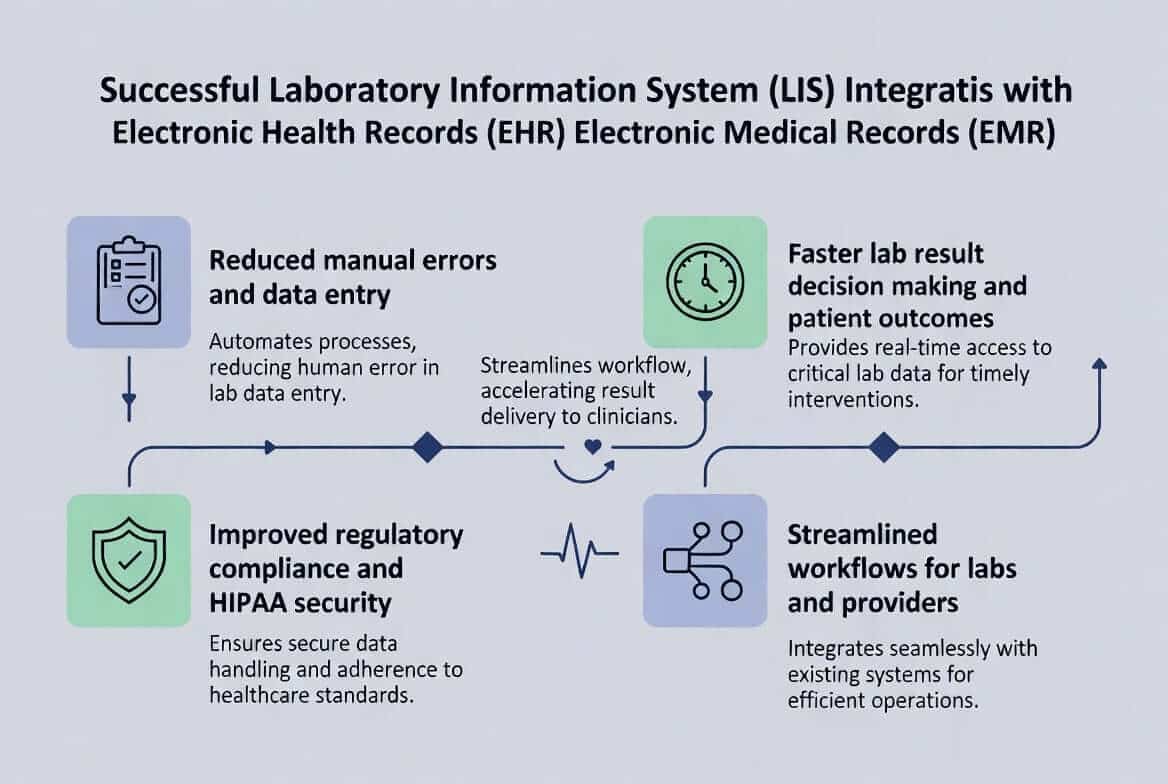
Key Benefits Realized After Successful LIS Integration with EHR/EMR
Laboratories that complete a well-executed integration project consistently report measurable improvements across operations and clinical outcomes.
Insert Image 3 here (Benefits infographic)
One major advantage of LIS integration with EHR/EMR is the near-elimination of manual data re-entry. Results flow directly from the LIS into the patient chart with all appropriate flags, comments, and interpretive information intact.
Clinicians gain immediate visibility into results, enabling faster treatment decisions and reducing the likelihood of duplicate testing. Laboratories see dramatic improvements in staff productivity because technologists spend less time on administrative tasks and more time on complex testing and quality oversight.
From a compliance and revenue perspective, clean integration supports better documentation for medical necessity, reduces claim denials related to missing or mismatched data, and creates complete audit trails that satisfy both HIPAA and CLIA requirements.
Ready to Transform Your Laboratory's Interoperability?
In today's value-based and patient-centered care environment, robust LIS integration with EHR/EMR is no longer a nice-to-have — it is a fundamental requirement for operational excellence, regulatory compliance, and competitive differentiation.
Whether you are replacing an aging system, expanding test menus, onboarding new referring practices, or simply frustrated with unreliable interfaces, the structured approach outlined in this guide provides a clear path forward.
Stratus DX is purpose-built to make LIS integration with EHR/EMR straightforward, reliable, and affordable. Our team brings deep experience connecting cloud LIS platforms to the EHR/EMR systems most commonly used by physician practices and health systems.
Request a Live Demo of Stratus DX
Stratus DX — The modern cloud LIS that makes seamless LIS integration with EHR/EMR a reality for laboratories of all sizes.
Frequently asked questions
What is LIS integration with EHR/EMR and why does it matter?
LIS integration with EHR/EMR allows your Laboratory Information System to communicate directly with Electronic Health Record or Electronic Medical Record systems. This connection enables automatic ordering of lab tests and real-time delivery of results into the patient chart. It reduces manual data entry, minimizes errors, speeds up turnaround times, and improves clinical decision-making.
How long does it typically take to complete LIS integration with EHR/EMR?
The timeline for LIS integration with EHR/EMR varies depending on the complexity of your systems and the number of interfaces needed. With a modern cloud-based LIS like Stratus DX, many laboratories complete integration in just a few weeks. Older on-premise systems often take several months due to custom coding and middleware requirements.
What standards are used for LIS integration with EHR/EMR?
Confirm the message types, standards, transport, code mapping, and responsibilities supported for your specific LIS and external-system project. Do not assume every advertised protocol applies to every interface.
What are the biggest challenges when implementing LIS integration with EHR/EMR?
Common challenges include inaccurate data mapping, lack of standardization between systems, security and HIPAA compliance concerns, and poor testing processes. Working with an experienced cloud LIS provider like Stratus DX helps reduce these risks through pre-built interfaces, thorough sandbox testing, and dedicated implementation support.
How does Stratus DX simplify LIS integration with EHR/EMR?
Stratus DX is a cloud-native LIS specifically designed to make integration easier. It offers native HL7 support, pre-configured interfaces with major EHR/EMR systems, zero hardware maintenance, and fast deployment. Because it’s cloud-based, new connections can often be set up in days or weeks instead of months, with lower overall cost and complexity.
What are the main benefits of successful LIS integration with EHR/EMR?
Successful LIS integration with EHR/EMR delivers faster lab result delivery, significantly fewer manual errors, improved clinician satisfaction, better regulatory compliance, and reduced claim denials. Laboratories also see higher productivity because staff spend less time on administrative tasks like faxing or re-entering results.