Lab Automation · LIS Demonstration · LIS/LIMS Software
Comparing LIS Systems in 2026: Features and Vendor Questions
How should you compare LIS systems?
Use the same requirements checklist for every vendor: deployment, analyzer and EMR connections, QC, reporting, implementation, support, and total cost. Ask vendors to demonstrate your workflow and identify what their quote includes. A feature-by-feature comparison is more useful than a generic ranking.

Build a shortlist around your requirements
An LIS shortlist should reflect the lab’s testing, interfaces, staff, providers, and reporting needs. A popular system can still be the wrong fit if it does not support the workflows your team relies on.
Use the same questions for every vendor
- Which workflows are included in the proposed configuration?
- Are our exact analyzer models and EMR supported?
- How are QC, review, corrections, and report delivery handled?
- Who manages infrastructure, updates, backup, and recovery?
- What does implementation require from the lab and each vendor?
- What does the complete quote include, and what changes as we grow?
Compare demonstrations, not just feature lists
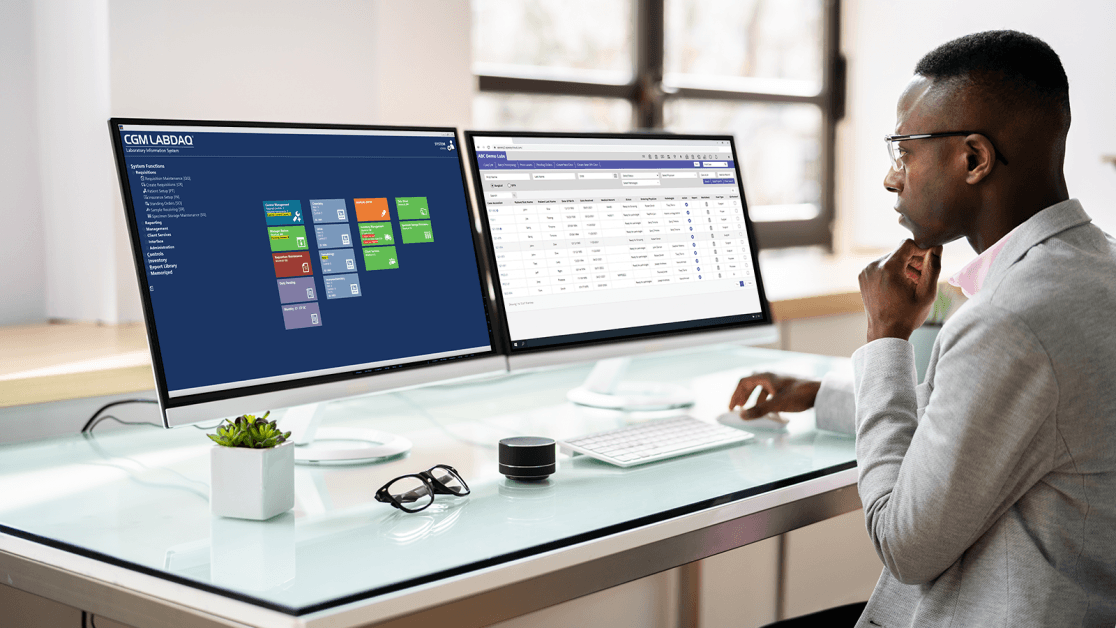
Use one typical order and at least one exception for each demonstration. Ask your accessioning, technical, review, and administrative staff to evaluate their parts of the process. Record which functions were demonstrated and which still require confirmation.

Review deployment and total cost
Cloud and on-premise arrangements assign infrastructure responsibilities differently. Compare the subscription or license, interfaces, hardware, maintenance, training, and optional services over the same period. Obtain a current written quote rather than relying on generic pricing estimates.
Include growth and support in the decision
Discuss a new analyzer, a new testing area, and additional provider or location workflows. Confirm how support is accessed and what configuration changes involve. This is more useful than assuming that one system is ranked best for every type of laboratory.
Evaluate Stratus DX against the same checklist
Stratus DX supports cloud workflows for physician office and reference labs, including instruments, HL7 interfaces, QC, reporting, and outreach. Review the available modules, instrument interfaces, and pricing approach as part of your comparison.
Frequently asked questions
What exactly are the top LIS systems in 2026?
The top LIS systems include Stratus DX, LigoLab, NovoPath, Clinisys, Epic Beaker, and QBench. They stand out for automation, integration capabilities, analytics, and scalability.
How do cloud-based top LIS systems compare to on-premise solutions?
Cloud-based top LIS systems like Stratus DX eliminate hardware costs, reduce maintenance, enable real-time access from anywhere, and scale instantly—advantages that legacy on-premise systems simply cannot match.
What is the typical cost of implementing one of the top LIS systems?
Costs vary widely. Modern cloud solutions like Stratus DX offer predictable, lower total ownership costs with no upfront hardware investment. Contact vendors directly for customized quotes based on your volume and needs.
Does Stratus DX integrate with my existing EHR and instruments?
Yes. As one of the top LIS systems, Stratus DX features full HL7 interfaces for all major EHRs plus 300+ direct instrument connections, making implementation fast and seamless.
How long does it take to go live with a top-tier LIS like Stratus DX?
Most labs are live within weeks—not months—thanks to Stratus DX’s intuitive design, pre-built interfaces, and dedicated U.S. support team.
Why should my lab switch to one of the top LIS systems now?
Switching to top LIS systems in 2026 delivers immediate gains in efficiency, error reduction, compliance, and profitability while positioning your lab for future growth in a competitive healthcare landscape.