Press Releases · LIS/LIMS Software
SaaS LIS for Clinical Labs: Features, Costs, and Responsibilities
What is a SaaS LIS for clinical labs?
A SaaS LIS is a laboratory information system delivered as a hosted subscription. The provider manages the hosted platform while the lab uses browser-based workflows and maintains its own procedures and local connections. Compare the subscription scope, interfaces, user access, support, and third-party responsibilities in writing.
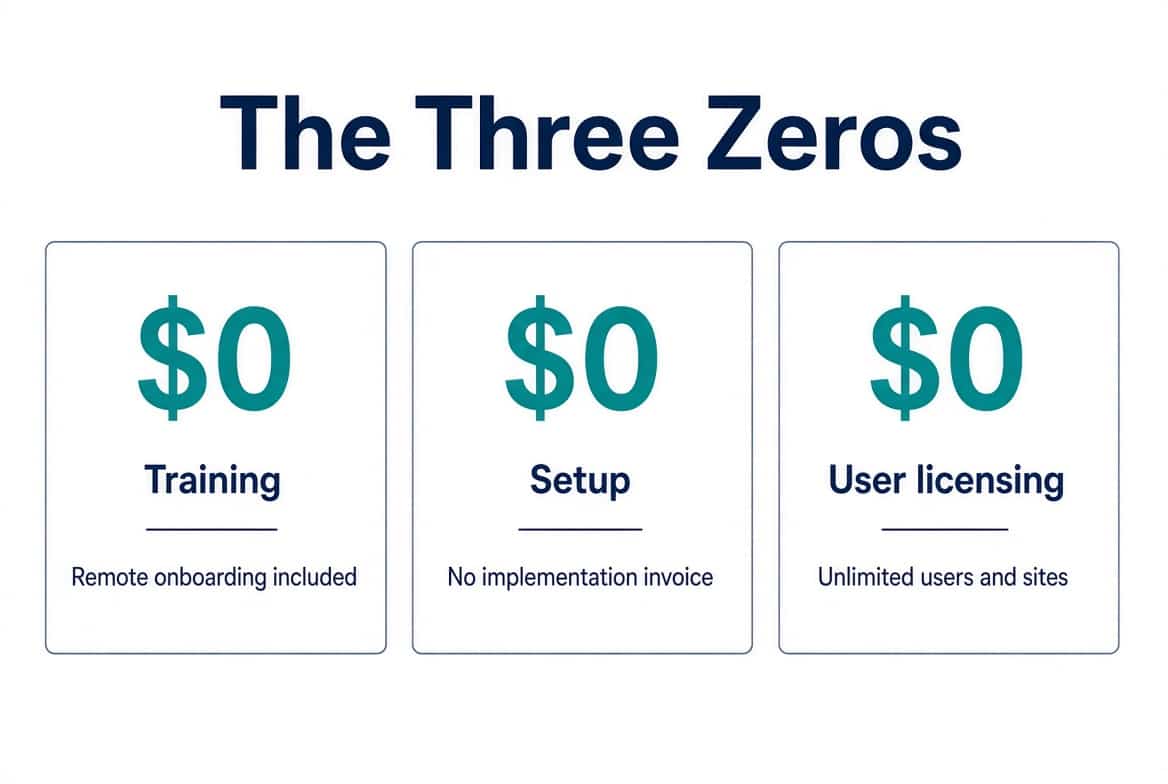
SaaS LIS for clinical labs
If you run a physician office lab, independent clinical lab, or growing reference operation, you have probably been quoted a client-server LIS that looked complete until the invoice arrived: servers, workstation licenses, on-site training, and a setup project that stretched for months. That model is why directors now search for a SaaS LIS for clinical labs instead of another box in the closet.
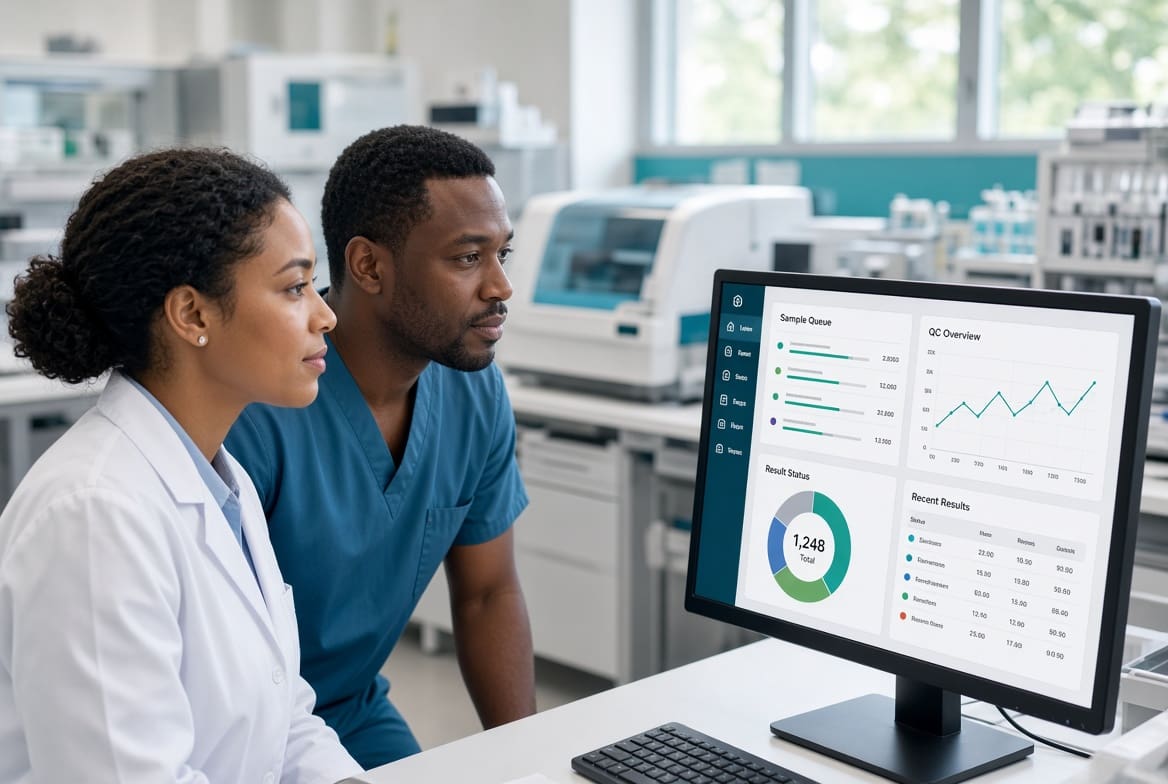
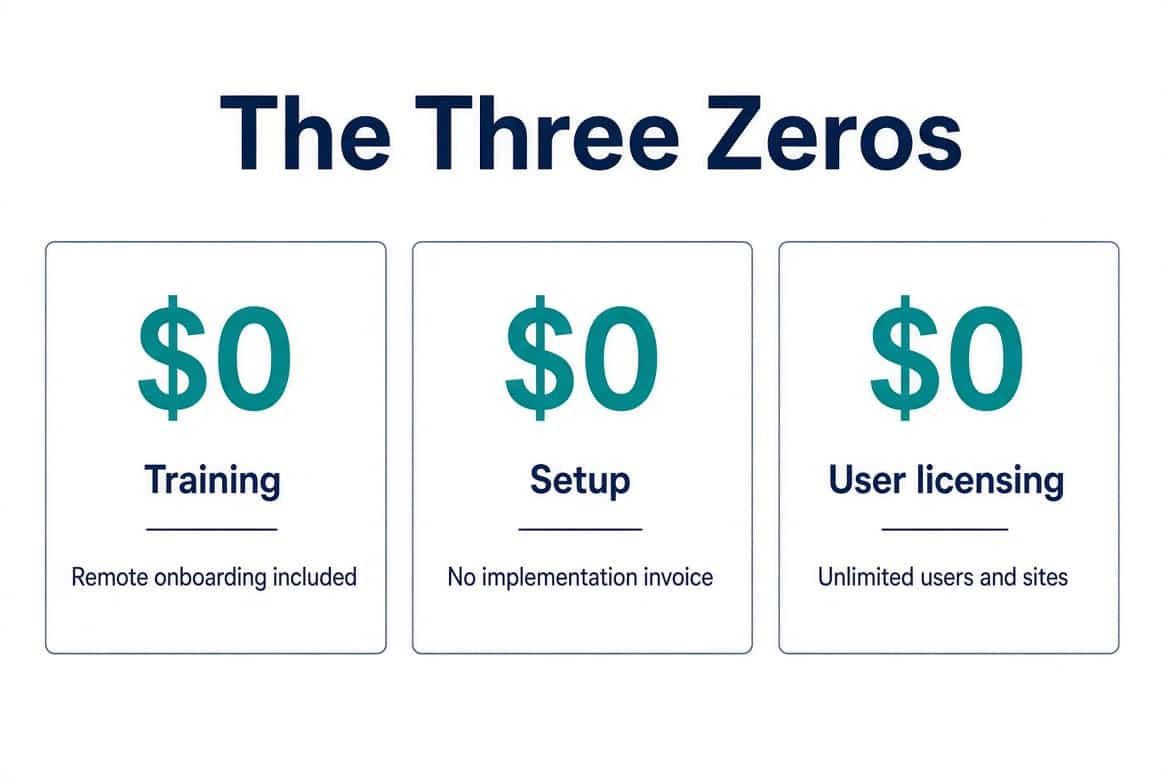
Stratus DX was built for that search. It is a full laboratory information system delivered as software-as-a-service: accessioning, instruments, QC, outreach, portals, and HL7—without buying hardware. The buy is organized around three zeros client-server vendors almost never match: $0 training, $0 setup, and $0 user licensing.
What a SaaS LIS for clinical labs actually is
A traditional LIS lives on a Windows server in your building. Workstations talk to that server. Your staff patch it and back it up. When the disk dies on a Saturday, your staff own the outage.
A SaaS LIS for clinical labs is different. The application, database, security stack, and backups live in professionally managed data centers. Your team logs in through a browser. Updates land without a weekend upgrade project. Adding a second location does not mean buying a second server.
Stratus DX is that model, built for clinical diagnostics rather than borrowed from a research LIMS. You still get the functions a director expects from a traditional LIS:
• Order entry, accessioning, and barcode labeling • Instrument interfaces — Stratus DX maintains a library of 300+ analyzer interfaces • Quality control with Levey-Jennings charts and Westgard rules • Result review, flags, and report delivery by print, fax, email, or SMS • HL7 and API connections to EMRs, billing systems, and reference partners • Provider outreach inbox and a patient portal • Modules for molecular, toxicology, microbiology, and pathology • 200+ management reports plus live workflow analytics • Insurance eligibility verification and cloud document management
The difference is not the feature list. The difference is that a SaaS LIS for clinical labs delivers that list without a capital project and without a hardware investment.
The three zeros
Most LIS quotes hide cost in three buckets: getting you live, teaching your people, and charging again every time you add a tech or a location. Stratus DX collapses those buckets.
• $0 training. Remote setup and training are included. You are not paying a daily on-site rate for a trainer to occupy your break room. • $0 setup. There is no implementation invoice for standing up the cloud environment. You are not funding a server build or a billable “go-live week” just to turn the lights on. • $0 user licensing. Unlimited user access. Unlimited organizations, locations, and providers at no additional seat cost. Night-shift techs, locums, outreach clerks, and consulting pathologists do not generate a new license line.
That last zero is the one that surprises owners. Client-server contracts often price per user per month, or as a large perpetual license plus annual maintenance, and then grow with the roster. A true SaaS LIS for clinical labs should not punish you for hiring.
 Three client-server systems labs still get quoted
None of the platforms below are empty products. They have large installed bases. They are, however, products of a client-server era: local or customer-managed servers, Windows workstations, and a cost structure built around licenses, implementation, and training. CAP TODAY’s Laboratory Information Systems product guide still lists each with a local-server path.
Orchard Harvest LIS
Compare a current, written quote that identifies the platform, interfaces, modules, implementation responsibilities, and any third-party charges. Do not assume another laboratory’s costs or results apply to your configuration.
CGM LABDAQ
LABDAQ has a large U.S. install base, broad analyzer and EHR coverage, and an optional hosted path. CAP TODAY still describes the core stack as client/server on Windows Server with SQL Server. Someone owns patches, SQL care, and backups unless hosting is an extra. That overhead is the opposite of what a SaaS LIS for clinical labs is supposed to remove.
Polytech LIS (Comp Pro Med)
Polytech is a configurable, lab-built system that can run locally, hosted, or on an edge network. The tradeoff is familiar: Windows client/server operations and customer-supported hardware in many deployments. Depth is valuable when you have an informatics team. It is costly when you do not.
Set next to those three, Stratus DX is not a lighter LIS. It is the same class of clinical workflow, delivered as a SaaS LIS for clinical labs so the laboratory does not also become a mini data center.
Cloud is more affordable, reliable, and secure
Affordable
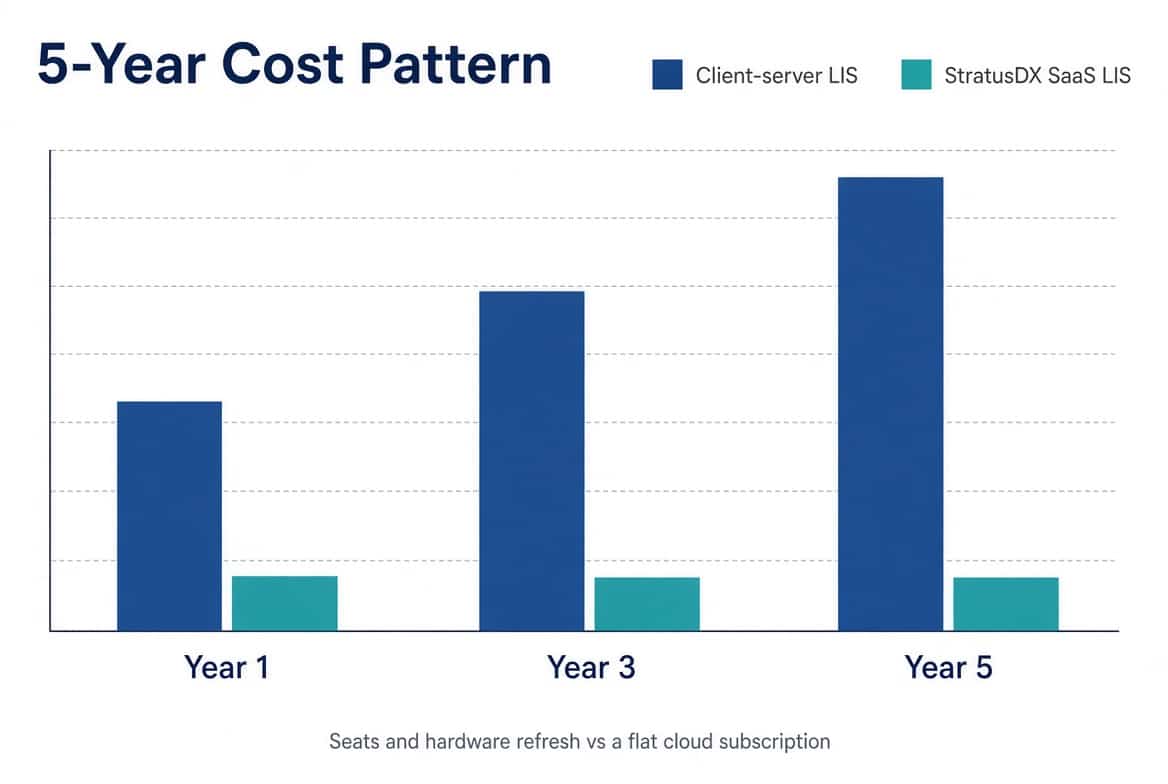
Client-server total cost is a stack: server hardware and a refresh cycle, Windows and SQL licensing, backup gear, an IT retainer, per-user seats, on-site training, and a setup project. Guides for Harvest-class systems routinely show first-year totals for a small user group in the tens of thousands before a specimen is accessioned.
A SaaS LIS for clinical labs like Stratus DX replaces that stack with a subscription and the three zeros. No server purchase. No seat tax as you add users. No billed kickoff week.
Cost driver | Typical client-server LIS | Stratus DX cloud LIS On-site server and SQL stack | You buy, patch, and replace it | None — hosted for you User licenses | Per seat, grows with headcount | $0 user licensing Implementation / setup | Project fees, often five figures | $0 setup Training | On-site days at daily rates | $0 training Backups and upgrades | Your weekend, your risk | Automated in the cloud Second site / extra providers | More hardware or more seats | Included — unlimited orgs and providers
Illustrative comparison. Competitor quotes vary; the pattern across client-server contracts does not.
Reliable
BAA available upon request; hosted on AWS and Liquid Web with encryption in transit and at rest and redundant backups.
Secure
BAA available upon request; hosted on AWS and Liquid Web with encryption in transit and at rest and redundant backups.
Traditional LIS functions, no hardware investment
Directors sometimes assume “cloud” means a lightweight portal. Stratus DX is the opposite: a complete clinical LIS that happens to live in the browser.
• POL to reference scale. Stratus DX covers low-volume physician office labs with EMR integration and QC. The full platform scales to multi-site reference work and multiple CLIA labs on one implementation. • Outreach included. Providers order and retrieve results from the web. Patients can view reports and print requisitions. • Operations in one place. Standing orders, kit management, sample storage, auto-label print, auto-fax, results messaging, scheduled data queries, and live analytics. • No hardware investment. Instruments still sit on the bench. The LIS does not. That is the point of a SaaS LIS for clinical labs.
Who should shortlist Stratus DX
• You are opening or expanding a POL and cannot justify a server room • You need unlimited users and locations without relicensing • You want QC, HL7, and outreach without a six-figure implementation • You have been quoted Harvest, LABDAQ, or another client-server system and the extras exceeded the software
If a health system already standardized on an EHR-native lab module and staffs a full informatics team, you may stay put. For independent clinical labs, the economics of a SaaS LIS for clinical labs are hard to ignore once the three zeros sit on the comparison sheet.
Client-server platforms earned their reputations when every lab owned a server. That decade is over. Stratus DX keeps the clinical depth—interfaces, QC, portals, specialty modules—and drops the parts that drain a small lab: hardware, seat licenses, billed training, and billed setup. If you have been searching for a SaaS LIS for clinical labs, start with those three zeros and ask every other vendor to match them.
See the platform: https://www.stratusdx.com/ | Physician office labs: https://www.stratusdx.com/pol/ | Reference labs: https://www.stratusdx.com/ref-lab/ | 1-888-585-5695
Further resources
Stratus DX cloud LIS home — https://www.stratusdx.com/About Stratus DX — https://www.stratusdx.com/about/Add-on modules — https://www.stratusdx.com/add-on-modules/Quality control module — https://www.stratusdx.com/qc/Patient portal — https://www.stratusdx.com/patient_portal/CAP TODAY LIS Product Guide — https://www.captodayonline.com/HHS HIPAA Security Rule — https://www.hhs.gov/hipaa/for-professionals/security/index.htmlHL7 Version 2 — https://www.hl7.org/implement/standards/product_brief.cfm?product_id=185HL7 FHIR — https://www.hl7.org/fhir/
Frequently asked questions
What is a SaaS LIS for clinical labs?
A SaaS LIS for clinical labs is a laboratory information system you use in a browser. The vendor hosts the software, database, backups, and security. You do not buy a server or install a thick client on every workstation. Stratus DX is built this way: full clinical workflow—orders, instruments, QC, results, outreach, and HL7—without hardware in your lab.
How is Stratus DX different from Orchard Harvest, CGM LABDAQ, and Polytech?
Those three are capable systems with large installed bases, and all still offer a client-server or local-server path. That usually means Windows servers, per-user licenses, setup projects, and training fees. Stratus DX is cloud-only. You get the same class of LIS functions with $0 training, $0 setup, and $0 user licensing, and no server to patch.
What do $0 training, $0 setup, and $0 user licensing include?
$0 training means remote setup and training are included—no on-site trainer invoice. $0 setup means you are not paying a project fee just to stand the system up. $0 user licensing means unlimited users, organizations, locations, and providers. Adding a night-shift tech or a second office does not add a seat charge.
Is a cloud LIS as secure as a server in our building?
BAA available upon request; hosted on AWS and Liquid Web with encryption in transit and at rest and redundant backups.
Does a SaaS LIS for clinical labs include the features of a traditional LIS?
Yes. Stratus DX covers accessioning, barcode labels, 300+ instrument interfaces, Levey-Jennings and Westgard QC, result delivery, EMR and billing interfaces, provider outreach, a patient portal, and modules for molecular, toxicology, microbiology, and pathology. The LIS sits in the cloud. The analyzers stay on the bench.
Who is Stratus DX a good fit for?
Physician office labs that cannot justify a server room, independent and reference labs that want unlimited users without relicensing, and teams tired of five-figure implementation quotes. If you already run an EHR-native hospital module with a full informatics staff, you may stay put. For most independent clinical labs, a SaaS LIS for clinical labs with the three zeros is the cleaner comparison.