
Industry News · Lab Automation · LIS/LIMS Software
LIS for Startup Labs: Planning Before the First Sample
When should a startup lab choose and configure its LIS?
Start planning while the test menu, instruments, and provider workflows are being defined. That gives the lab time to scope interfaces, build directories and reports, validate workflows, and train staff before launch. Confirm the implementation timeline with all participating vendors rather than assuming an immediate go-live.
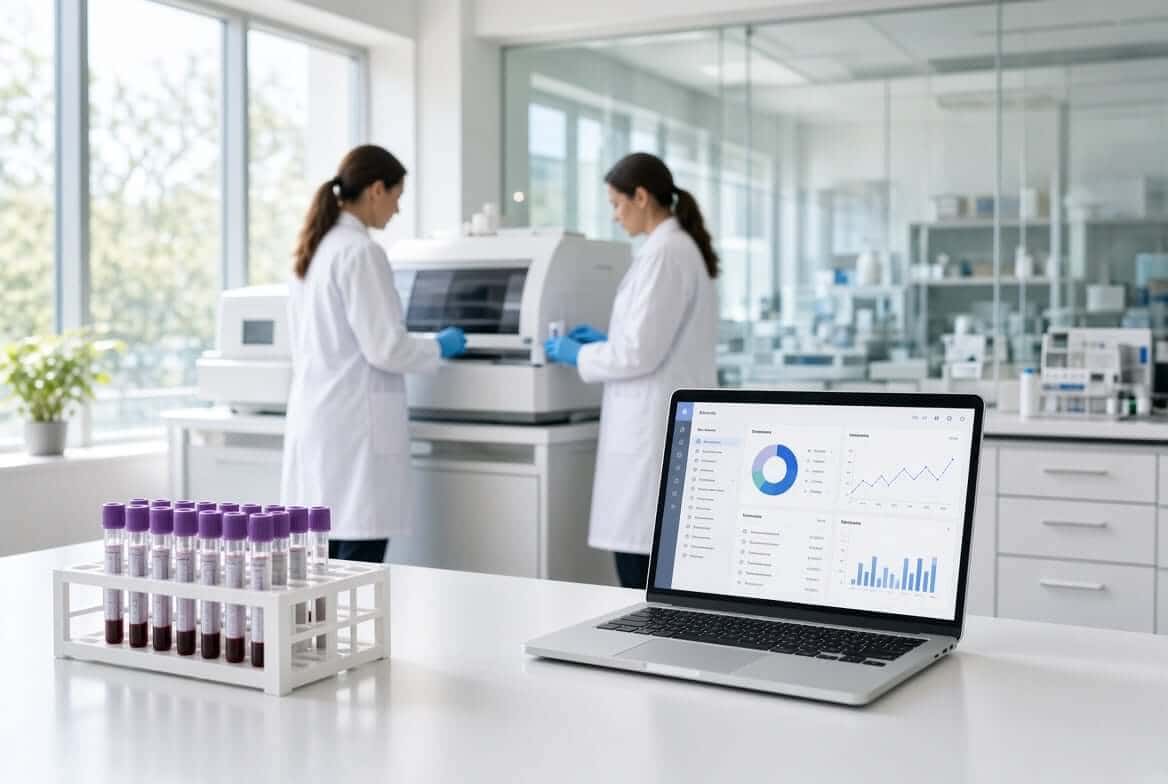
Opening a clinical diagnostic laboratory in 2026 is harder than writing a business plan. You need a CLIA certificate, instruments, a test menu, a billing path, and a system that will not collapse the first time an EHR sends an order. That system is a laboratory information system. The search that new directors type most often is LIS for startup labs, because the first software decision either protects cash and compliance or burns both.
This article is written for that buyer. It explains why new clinical laboratories struggle to find reliable, affordable, and efficient software, what an honest evaluation looks like, and why Stratus DX is a cloud-based laboratory information solution for laboratories that are starting up.
Why new clinical labs struggle to choose software
A hospital can absorb a year-long implementation and a six-figure interface budget. A physician office laboratory, an independent start-up, or a new reference outreach shop cannot. The market still treats those two buyers as if they have the same problems. They do not.
The first struggle is reliability. Spreadsheets and paper accession logs fail the moment volume rises or an inspector asks for an audit trail. Legacy client-server platforms are reliable in a different way: they work if you hire IT staff, buy servers, and live with downtime during upgrades. That is not a model a new lab can fund.
The second struggle is cost. Many vendors quote an attractive license and then add charges for users, locations, interfaces, training, and change orders. A director who thought they were buying an LIS for startup labs discovers they bought an enterprise project.
The third struggle is efficiency. A new lab has a small bench and a short list of people who can run it. Software that requires weeks of dictionary building, a dedicated analyst, and a separate QC product will slow go-live. The right LIS for startup labs has to cover accessioning, instruments, QC, reporting, and provider connectivity without a separate stack for each job.
Professional organizations have said the same thing for years. CAP trains on laboratory information system fundamentals because the LIS is central to clinical lab operations (CAP: Laboratory Information Systems Fundamentals). CLSI publishes guidance on managing electronic laboratory information so records stay complete and defensible (CLSI QMS22). APHL documents how an LIS supports specimen tracking, result reporting, and data security (APHL LIS Guidebook). Those sources describe the job. They do not name a vendor.
What a real LIS for startup labs must do on day one
Ignore feature theater. A usable LIS for startup labs has to finish a short list of jobs before the first patient sample is reported.
Orders and accessioning. Orders arrive from an EMR, a portal, a standing order, or a paper requisition. The system has to create the accession, print barcodes, and keep patient and specimen identity intact. Auto-label printing from an HL7 order is not a luxury. It is how a two-person bench avoids mislabels.
Instrument connectivity. New labs buy the analyzers they can afford, then add more as volume grows. An LIS for startup labs that only interfaces a handful of instruments will force another project every time the menu expands. A library of hundreds of interfaces matters more than a glossy dashboard.
Quality control. CLIA does not wait until you are profitable. Westgard rules, Levey-Jennings charts, lot tracking, and an audit of who reviewed a failed control have to live inside the same system that releases results. A separate QC spreadsheet is how inspection findings start.
Reporting and outreach. Physicians will not stay with a lab that faxes late or cannot deliver results into the EMR. Web portals, auto-fax, email, and HL7 result interfaces are the difference between a test menu and a business.
Security and backups without a server room. HIPAA, daily backups, and encrypted access should be part of the hosted platform. A start-up should not be patching a Windows box in a closet.
Why cloud changes the math for a start-up
Client-server products assumed on-site IT. Most new diagnostic laboratories do not have that staff. A cloud platform removes the server, workstation licenses, and after-hours upgrade window. Staff open a browser. Providers open a portal. The vendor patches the system.
That architecture is why a modern LIS for startup labs can be cheaper to own, not only cheaper to license. Cost of ownership is servers, interfaces, downtime, and the person who keeps it alive. Remove those line items and the software that looked “premium” on a quote sheet is often the expensive option.
Cloud also changes scale. A physician office laboratory that later adds outreach should not rip out the first system. The same database should accept more users, more locations, and more instruments without a second license model. That is the practical definition of an LIS for startup labs that can still be the system you run at year five.
How Stratus DX is built for this buyer
Stratus DX is a cloud-based laboratory information system designed for physician office laboratories and reference laboratories. It was founded in 2011 by laboratory and healthcare IT professionals. The public product story is consistent: no client-server relic, no hardware requirement, and a lower cost of ownership because the lab is not maintaining infrastructure.
Those claims map to the three problems above.
Reliable. Stratus DX runs in the cloud with hosting on AWS and Liquid Web, encryption in transit and at rest, and redundant backups. QC is not an afterthought. The QC module supports Levey-Jennings and Westgard rules, control lots, daily control reports, corrective action reporting, and an audit trail of who reviewed a result. Modules cover the work a start-up actually grows into: chemistry and routine clinical testing, plus pathology, microbiology, toxicology, and molecular diagnostics with plate mapping and instrument interfaces. A library of more than 300 instrument interfaces and HL7 connectivity to EHRs, billing systems, and reference labs is how the system stays reliable as the menu changes.
Affordable. The company positions Stratus DX as an affordable LIS that requires no maintenance and lowers cost per sample through automation. Unlimited user access, organizations, locations, and providers at no additional cost is a pricing structure a start-up can live with. You are not punished for adding a second collector, a second site, or a new outreach client. That is the opposite of the per-seat trap that makes an LIS for startup labs look cheap in month one and expensive in month six.
Efficient. The interface is browser-based. Orders can print labels automatically when an EMR message arrives. Results can go out by portal, web fax, email, or SMS. Insurance eligibility verification can run before the sample is worked. Assessment forms, laboratory analytics, document management, standing orders, kit management, and more than 200 management reports sit in the same platform. The lab does not hire a project team to stitch five products together.
Scale is explicit on the product site: the same system is intended to work in a small POL and to process thousands of samples a day in a reference laboratory. Multiple CLIA-certified labs can run on a single implementation. That is the growth path a director wants when they search for an LIS for startup labs instead of an enterprise replacement project.
A practical buying checklist for 2026
If you are comparing vendors this year, score them on the work you will do in the first 90 days, not on a slide about artificial intelligence.
- Can we accession, interface our first analyzers, run QC, and report without buying a second product?
- Is hosting, backup, and security included, or is that our problem?
- How are users, locations, and interfaces priced after go-live?
- How many instrument interfaces exist today for the analyzers we already purchased?
- Can providers order and view results without calling the bench?
- Will the same system still fit if volume multiplies?
An LIS for startup labs that fails any of those questions will cost more than the invoice shows. A system that passes them is a platform, not a temporary workaround.
Stratus DX is built to pass that list. It is cloud-hosted, instrument-rich, QC-capable, and priced so growth does not trigger a new contract for every user. For clinical diagnostic laboratories that are tired of choosing between a spreadsheet and a legacy server, it is a cloud-based option on the market in 2026.
Start before the first sample arrives
Software is not the only decision a new laboratory makes, but it touches every other one: instruments, inspection records, physician results, and billing. Choose a system that does that work without an IT department.
If you are evaluating an LIS for startup labs this year, schedule a demonstration of Stratus DX at Stratus DX.com or call 1 (888) 585-5695. See the workflow on your test menu, not on a generic tour. The labs that open cleanly in 2026 will be the labs that treated the information system as infrastructure, not as an afterthought.
Frequently asked questions
What should I look for in an LIS for startup labs?
Look for a system that can accession samples, connect your first analyzers, run QC, and report results without a second product. An LIS for startup labs should also include hosting, backups, and security so you are not standing up a server room on day one.
Why do new clinical labs struggle to buy laboratory software?
Most products are built for hospitals or large reference labs. New labs get quoted enterprise licenses, extra fees for users and interfaces, and long implementations. That is why searches for an LIS for startup labs usually come down to reliability, price, and how fast the bench can go live.
Is a cloud LIS better than a client-server system for a new lab?
For most start-ups, yes. A cloud LIS removes servers, workstation licenses, and after-hours upgrades. Staff and providers use a browser. That lower cost of ownership is a major reason labs compare a cloud LIS for startup labs against legacy client-server platforms.
How does Stratus DX support an LIS for startup labs?
Stratus DX is a cloud-based LIS for physician office labs and reference labs. It includes instrument interfaces, QC with Westgard and Levey-Jennings tools, HL7 connectivity, portals, and reporting. Users, locations, and providers are not billed as add-ons, which keeps an LIS for startup labs affordable as volume grows.
Can the same LIS still work if my start-up becomes a reference lab?
It should. The system you choose as an LIS for startup labs needs to add instruments, sites, and outreach without a rip-and-replace. Stratus DX is designed to run in a small POL and scale to high daily volume, including multiple CLIA labs on one implementation.
When should I choose an LIS if I am opening a lab in 2026?
Choose it before the first patient sample is reported. Instruments need interfaces, inspectors need records, and physicians need results. If you are evaluating an LIS for startup labs now, schedule a Stratus DX demo at Stratus DX.com or call 1 (888) 585-5695.